
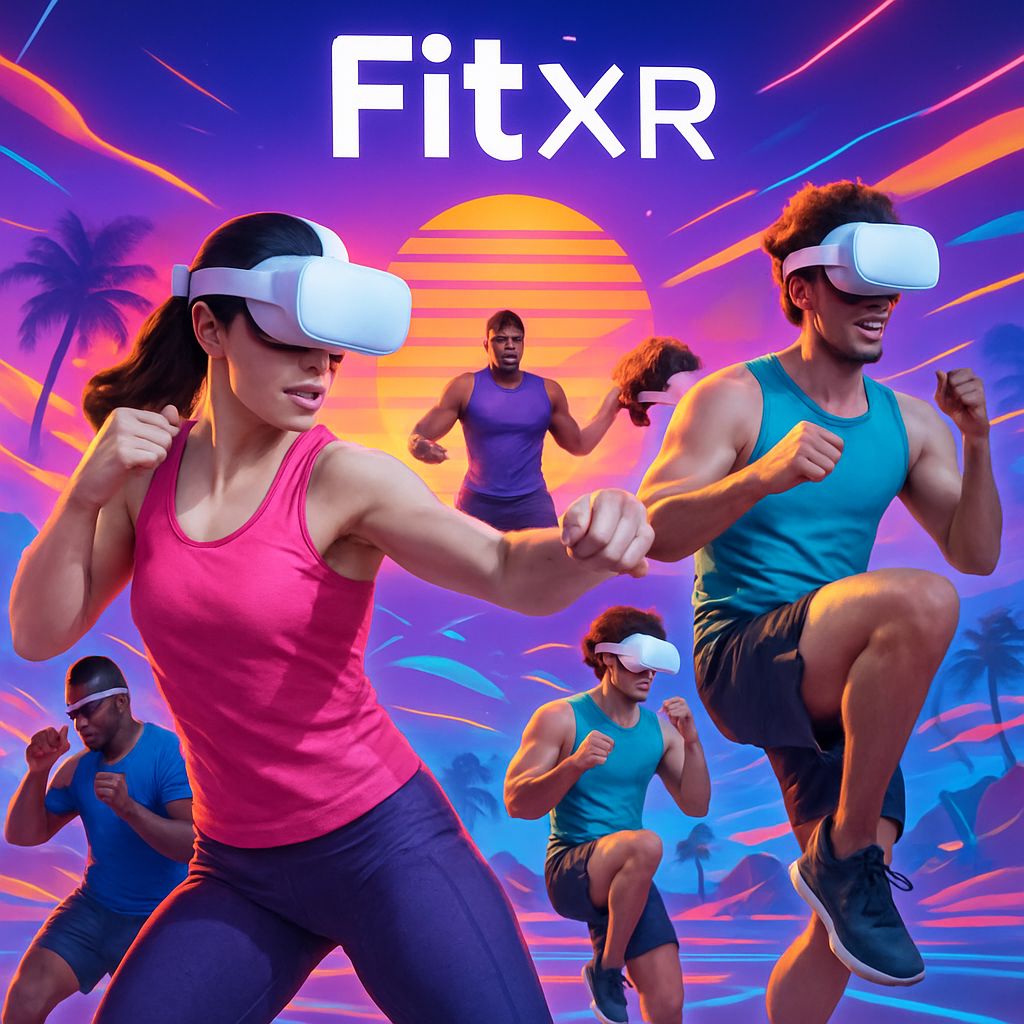
- FitXR’s randomized controlled trial, led by Dr. Brendon Stubbs PhD, showed participants burned 13% more calories in VR workouts compared to standard exercise.
- 91% of FitXR users reported an improvement in their emotional state after a VR workout — a result that’s hard to find in traditional gym settings.
- FitXR offers five distinct workout studios — Box, Dance, HIIT, Sculpt, and Combat — available on Meta Quest 2 and Pico XR headsets.
- The trial included 83 adults who had never tried VR fitness before, making the results especially relevant for first-time users.
- Keep reading to find out why the shift to a daily subscription model might be the thing that finally makes your fitness routine stick.
VR fitness just got its most compelling evidence yet — and it came from a proper clinical trial, not a marketing campaign.
FitXR, one of the leading VR fitness platforms available today, commissioned a rigorous randomized controlled trial to test whether working out in virtual reality actually delivers real-world results. The findings were striking enough to change how the fitness world thinks about immersive exercise. FitXR has positioned itself at the forefront of this shift, combining evidence-backed workout design with a genuinely fun experience that keeps people coming back.
91% of Users Felt Better After FitXR — Here’s What the Science Says
Most fitness apps make bold claims. FitXR went further and put their product through a randomized controlled trial — the gold standard in scientific research — to find out whether VR exercise could outperform standard exercise in key health metrics. The short answer is yes, and by measurable margins.
What the Randomized Controlled Trial Actually Measured
The trial was designed and conducted by Dr. Brendon Stubbs, PhD, a world-leading exercise researcher. Its aim was specific: to measure the differences in perceived exertion, mental health, and enjoyment when comparing FitXR workouts to standard exercise. These aren’t vanity metrics — perceived exertion is a well-established predictor of long-term exercise adherence, and enjoyment is directly linked to whether people keep showing up.
Who Took Part in the FitXR Clinical Trial
The trial recruited 83 adults, none of whom had any prior experience with VR fitness. This is a critical detail. By starting with a completely fresh cohort, the results reflect what a genuine beginner can expect — not the outcomes of already-converted enthusiasts. The diversity of that sample makes the data far more applicable to the average person considering FitXR for the first time.
What FitXR Actually Is
FitXR is a VR fitness platform that merges immersive virtual reality environments with total body workouts designed by top fitness experts. Its core mission is simple: make fitness more fun and more accessible for everyone, regardless of their starting point. Whether you have five minutes or an hour, FitXR is built to meet you where you are.
From BoxVR to FitXR: A Three-Year Evolution
FitXR originally launched as BoxVR, a VR boxing workout experience that quickly built a loyal following. The rebrand to FitXR marked a significant expansion — not just in name, but in scope. The platform evolved from a single workout style into a multi-studio fitness club, reflecting the team’s ambition to make VR the go-to destination for full-body exercise.
Five Studios Available on FitXR
FitXR currently offers five distinct workout studios, each targeting a different style of movement and fitness goal:
- Box — High-energy punching combinations that build cardio and upper body strength
- Dance — Rhythm-based full-body movement that doesn’t feel like exercise until your legs give out
- HIIT — Short, intense intervals designed for maximum caloric burn in minimum time
- Sculpt — Resistance-focused sessions that target muscle tone and endurance
- Combat — A martial arts-inspired studio blending striking techniques with serious cardio output
Meta Quest 2 and Pico XR Compatibility
FitXR is currently available on Meta Quest 2 and Pico XR headsets. Both platforms offer standalone VR, meaning no PC or wires are required to get a full workout. This hardware accessibility removes one of the biggest barriers to entry for people curious about VR fitness but not ready to invest in a complex setup.
The Clinical Trial Results Are Hard to Ignore
When the data came back from Dr. Stubbs’ randomized controlled trial, it didn’t just confirm that FitXR was enjoyable — it confirmed that FitXR was physiologically and psychologically superior to matched standard exercise across every metric measured. For a field still fighting for scientific credibility, these numbers matter enormously.
13% More Calories Burned Versus Standard Exercise
Across the 83 participants, FitXR workouts resulted in a 13% increase in energy expenditure compared to standard exercise. That gap is significant. It means that for the same duration of movement, your body is working harder inside a VR environment than it would be doing a conventional workout. The immersive nature of the experience appears to push people past the effort thresholds they’d normally self-impose.
18% Higher Perceived Exertion
Participants rated their effort 18% higher during FitXR sessions than during matched standard exercise. At first glance, that might sound like a downside — but in exercise science, higher perceived exertion combined with higher enjoyment is the ideal combination. It means people are working harder and enjoying it more at the same time.
This pairing is rare in traditional fitness settings. Most people either work hard and hate it, or enjoy themselves without breaking a real sweat. FitXR appears to bridge that gap in a way that conventional gym sessions rarely achieve.
19% Greater Enjoyment During Workouts
Enjoyment might sound like a soft metric, but it’s one of the strongest predictors of long-term exercise consistency. A 19% increase in enjoyment is not a marginal improvement — it’s the difference between someone who completes three sessions and quits versus someone who builds a lasting habit. When movement feels like play, the psychological resistance to showing up drops dramatically. For example, integrating elements of combat sports into VR fitness can enhance the experience, making workouts feel more engaging and enjoyable.
For the 83 participants who had never tried VR fitness before, that 19% boost came without any prior attachment to the platform. These weren’t loyal FitXR users who were already sold on the experience. These were first-timers, and the enjoyment gap was still substantial right out of the gate.
91% of Participants Reported Improved Emotional State
Perhaps the most powerful finding in the entire trial: 91% of participants reported an improvement in their emotional state after exercising with FitXR, compared to matched standard exercise. Participants were described as more alert and happier following their VR sessions. In the context of Mental Health Awareness, this data point alone makes a compelling case for VR fitness as a tool for psychological wellbeing — not just physical performance.
What the Multiplayer Experience Feels Like
One of FitXR’s most underrated features is its multiplayer functionality. Working out alongside other people — even virtually — activates the same social accountability mechanisms that make group fitness classes so effective in the real world. The presence of others, even as avatars, changes how hard you push yourself.
FitXR’s multiplayer experience lets users work out in real time with friends or join public classes with other members from around the world. The shared environment creates a genuine sense of energy in the room that solo home workouts simply can’t replicate. It’s one of the key reasons FitXR feels less like a fitness app and more like an actual fitness club.
How to Access a Multiplayer Class
Joining a multiplayer session in FitXR is straightforward. From the main hub, you can either invite friends directly or drop into a live class that other members are already attending. The platform regularly refreshes its class schedule, so there’s almost always an active session running across one of the five studios regardless of what time you strap on your headset. For more details, check out this FitXR Oculus Quest subscription article.
What You Can Actually See During a Group Workout
During a multiplayer session, other participants appear as avatars moving alongside you in the same virtual environment. You can see their movements in real time, which creates a subtle but powerful competitive and motivational dynamic. Watching another avatar push through the final round of a HIIT session when your arms are burning is often all the encouragement you need to keep going.
Current Limitations of the Avatar System
The avatar system, while effective at creating social presence, is still relatively basic in terms of visual customization and physical expressiveness. Body language nuances and facial expressions aren’t yet part of the experience, which means some of the deeper social connection you’d feel in a real group class is still missing. That said, the functional motivation it provides is already well ahead of anything a solo workout app can offer.
FitXR’s Subscription Model Changes Everything
FitXR made a deliberate and strategically significant move when it shifted from a one-off payment model to a monthly subscription. This wasn’t just a business decision — it fundamentally changed what the platform could deliver to its users. A subscription structure funds the constant content refresh that makes FitXR worth returning to every single day, rather than a one-time purchase that grows stale within weeks.
Why FitXR Moved Away From One-Off Payments
“FitXR aims to inspire and motivate individuals to incorporate movement into their daily lives, whether it’s for five minutes or an hour.” — FitXR
The old model was simple: pay once, own the app forever. But that structure created a content ceiling. Once you’d cycled through the available workouts, the novelty wore off and the headset ended up on a shelf. A monthly subscription changes the incentive structure entirely — FitXR now has a direct financial reason to keep delivering fresh content, and users have a direct reason to keep showing up.
The subscription model also unlocks multiplayer functionality and constantly refreshed class libraries, which are the two features most responsible for long-term engagement. Without them, FitXR is a good workout app. With them, it behaves more like a living, breathing fitness club that updates itself every single day. For more insights on how FitXR transforms into a virtual gym, check out this Engadget article.
For users who were accustomed to one-off purchases in the VR space, the shift required a mindset adjustment. But the value proposition is straightforward: if you use FitXR even three or four times a week, the cost per session quickly becomes competitive with — or cheaper than — a traditional gym membership, without the commute, the wait times, or the social friction of a crowded weight room.
A New Workout Every Day: What That Means for Consistency
Consistency is the single most important variable in any fitness journey, and boredom is its biggest enemy. When you already know exactly what workout is waiting for you, the motivation to start drops. FitXR’s daily new class system directly attacks that problem by ensuring there is always something new to try, regardless of which studio you prefer or how long you have to train.
New environments and updated music playlists are also rotated alongside new classes. This matters more than it might seem. The sensory environment in a VR workout affects how hard you push and how quickly time passes. A fresh visual setting combined with a new tracklist can make the same boxing movement pattern feel like a completely different workout — and that novelty is what keeps people lacing up day after day.
For anyone who has ever started a fitness routine with real enthusiasm only to abandon it six weeks later, this is the structural fix that was missing. The content never runs out. The excuse of being bored disappears with engaging options like Les Mills BodyCombat VR.
Is FitXR Worth It for Your Fitness Routine?
If you own a Meta Quest 2 or Pico XR headset and you’ve been struggling to make exercise feel like something you actually want to do, FitXR is one of the most evidence-backed answers available right now. The clinical trial data is real, the studios are genuinely varied, and the daily content refresh solves the consistency problem that kills most home fitness routines. The 91% emotional improvement rate alone is a number most pharmaceutical interventions would envy. This isn’t a gimmick — it’s a legitimate fitness platform with the science to prove it.
Frequently Asked Questions
VR fitness is still a relatively new concept for most people, and FitXR sits at the intersection of technology and exercise in a way that naturally raises questions. Whether you’re trying to figure out whether your current headset is compatible, or you want to know how a boxing session in virtual reality actually stacks up against a real gym workout, the answers below cover the most common concerns from first-time users.
The clinical trial results give FitXR a credibility that most fitness apps can’t claim, but understanding exactly what to expect before you commit is still important. From beginner suitability to mental health benefits, here’s what you need to know.
These questions come up repeatedly from people who are curious about FitXR but haven’t yet made the leap. The answers are straightforward, and in most cases, the barrier to entry is lower than people assume.
Is FitXR suitable for complete fitness beginners?
Yes. The randomized controlled trial that underpins FitXR’s evidence base was conducted entirely with participants who had never tried VR fitness before. All 83 adults in the study were first-timers, and they still saw significant improvements in calorie burn, enjoyment, and emotional wellbeing. The platform is designed to be accessible regardless of your starting fitness level, with classes across five studios that range in intensity and style.
Each studio also offers varied class lengths and difficulty levels, so a complete beginner can start with a shorter Dance or Box session and build up gradually. You don’t need to be fit to start FitXR — you start FitXR to get fit.
What headset do I need to use FitXR?
FitXR is currently available on the Meta Quest 2 and Pico XR headsets. Both are standalone devices, which means you don’t need a gaming PC or external sensors to run the platform. You put the headset on, open the app, and you’re in your virtual fitness studio within seconds.
How does FitXR compare to a real gym workout?
Based on the clinical trial data, FitXR actually outperforms standard exercise across key metrics. Participants burned 13% more calories during FitXR sessions compared to matched conventional workouts, and rated their exertion 18% higher — meaning they worked harder without necessarily feeling like they were suffering more. The immersive environment appears to push users past the self-imposed effort limits that often cap the effectiveness of solo gym sessions. It’s not a replacement for heavy strength training, but for cardio, HIIT, and full-body conditioning, the results speak for themselves.
Does FitXR actually improve mental health?
The trial data is clear: 91% of participants reported an improvement in their emotional state after exercising with FitXR, compared to matched standard exercise. Participants were measurably more alert and happier following their VR sessions. Dr. Brendon Stubbs, PhD, the world-leading exercise researcher who conducted the trial, confirmed that FitXR’s product works to improve both physical and mental health. For anyone using exercise as part of a broader strategy for managing stress, anxiety, or low mood, these findings are particularly significant.
How much does a FitXR subscription cost?
FitXR operates on a monthly subscription model, which replaced the original one-off payment structure. The subscription grants access to all five studios, daily new classes, multiplayer functionality, and regularly refreshed environments and music playlists. For the most current pricing, it’s best to check directly on the FitXR platform or within the Meta Quest or Pico store listings, as pricing can vary by region.
What’s worth calculating is the cost per session. If you use FitXR four times a week, the monthly subscription cost breaks down to a fraction of what a single gym class or personal training session would cost. For a platform with clinical trial backing and daily content updates, that math tends to work strongly in FitXR’s favour.
0 responses to “FitXR VR Fitness Trial Review”